 616.900.9717
 Wyoming, MI


Exercises to improve balance for seniors are gentle movements that help strengthen the legs, core, posture, and coordination, so daily activities feel steadier and safer. These exercises may include sit-to-stand practice, standing marches, side steps, heel-to-toe walking, and supported single-leg balance.
For seniors and families in Wyoming, MI, Wyoming Woods offers assisted living support in a setting where movement, daily routines, and meaningful activities can work together. You will learn which balance exercises may help, how to practice them safely, and when added support may make daily life feel more manageable.
What Are Exercises to Improve Balance for Seniors?
Exercises to improve balance for seniors are movements that help the body stay steady while standing, walking, turning, or changing positions. They often support leg strength, posture, coordination, and confidence during everyday routines.
Common examples include standing marches, heel raises, side steps, sit-to-stand movements, and heel-to-toe walking. The Physical Activity Guidelines for Americans provide evidence-based guidance for physical activity, including movement that helps adults maintain or improve health.
Why Balance Matters for Daily Life in Assisted Living
Balance affects simple moments that can shape the day, such as getting dressed, walking to dining, joining a class, or moving through a shared space. When a senior feels unsure on their feet, they may begin stepping back from activities they used to enjoy.
At Wyoming Woods, balance connects naturally to daily engagement, including fitness classes, gardening, dining, Bible Study, board games, bingo, music, film enjoyment, and gatherings in beautiful communal spaces. Families exploring assisted living support may find it helpful to think about both movement and confidence.
Best Balance Exercises for Seniors to Try Safely
The best balance exercises for seniors are simple, steady, and easy to adjust. A sturdy chair, counter, or nearby support can help a senior practice with more confidence.
Sit-to-Stand Practice
Sit-to-stand practice helps strengthen the legs and supports daily transitions, such as rising from a chair or getting ready for an activity. Move slowly, keep feet flat, and use support if needed.
Supported Standing Marches
Standing marches help with coordination and weight shifting. Hold a sturdy surface, lift one knee at a time, and keep the movement controlled.
Heel-to-Toe Walking
Heel-to-toe walking supports steadiness while moving forward. Step slowly in a straight line, placing the heel of one foot near the toes of the other.
Side Steps Near a Stable Surface
Side steps help with balance during side-to-side movement. This can be useful for moving around furniture, common spaces, or a bathroom area with care.
Supported Single-Leg Balance
Supported single-leg balance can help improve steadiness, but it should be done carefully. Keep a chair or counter nearby and lift one foot only as much as feels safe.
Balance Exercises for Seniors at Home vs. Assisted Living Support
Balance exercises for seniors at home can be helpful when the space is safe and support is nearby. Still, some families notice that a loved one needs more consistency, reassurance, or mobility help during daily routines.
| Exercise Setting | Best For | Safety Consideration | When Extra Support Helps |
| At home | Simple daily practice | Use a stable chair and clear floor space | If the senior feels unsteady |
| With family nearby | Encouragement and supervision | Keep movements slow and calm | If confidence is low |
| Assisted living setting | Routine, engagement, and daily support | Support may be available during daily movement | If mobility help is part of care needs |
Wyoming Woods provides assistance with mobility in living spaces and common spaces, along with help with dressing, self-care, hygiene, and bathroom needs. Families unsure about current support needs can begin with a care assessment.
A Simple Balance Routine Seniors Can Start With
A simple routine can make balance practice feel less overwhelming. The goal is not to rush or do everything perfectly, but to build steady habits in a safe way.
A gentle routine may include:
- Sit-to-stand practice
- Standing marches
- Side steps
- Heel raises
- Heel-to-toe walking
These free exercises for balance for seniors can be done at home when the space is safe. The NHS balance exercise guidance suggests doing balance exercises near a wall or stable chair in case support is needed. For another short movement idea, you may also explore 10 Minutes Workout for Seniors to Build Better Balance.
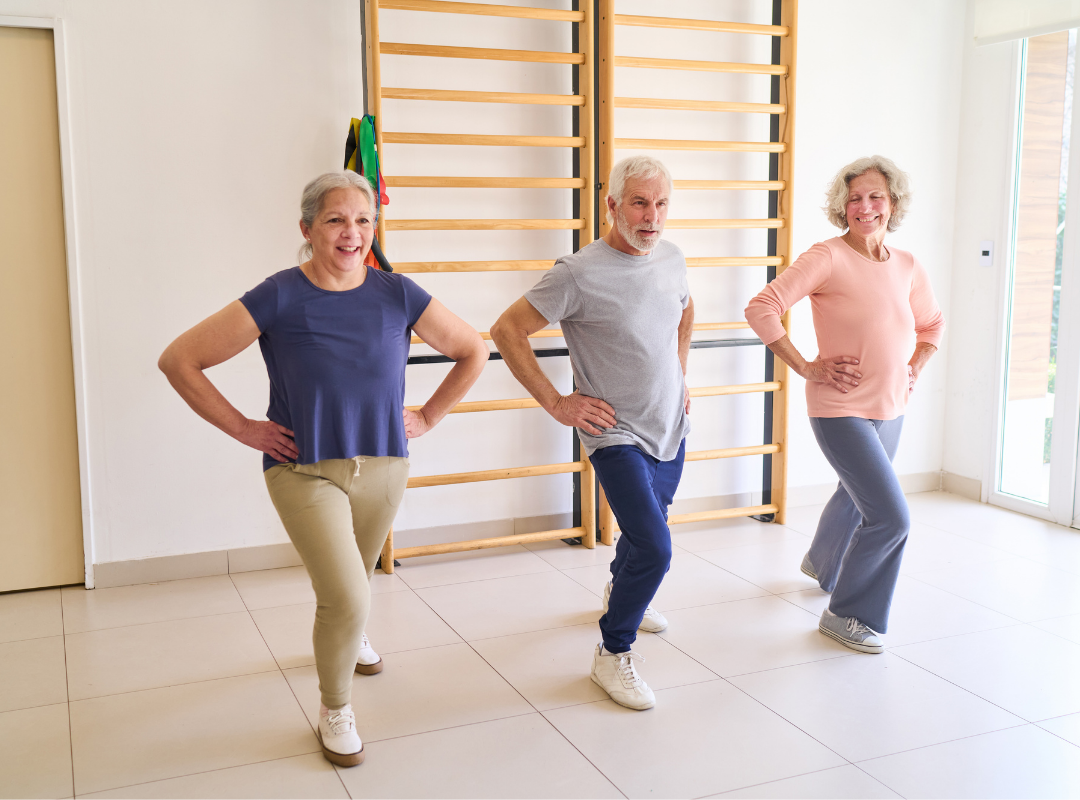
Safety Tips Before Starting Fall Prevention Balance Exercises
Safety should come first with fall prevention balance exercises for seniors. The CDC reports that more than 1 out of 4 older adults falls each year, which is why steady movement, clear spaces, and the right support matter.
Use supportive footwear, keep floors clear, avoid rushing, and stop if pain, dizziness, or unusual weakness occurs. If you notice your parent holding furniture while walking to the dining area or hesitating before joining activities, it may be time to talk about safer daily support.
How Wyoming Woods Supports Confidence, Movement, and Daily Engagement
Balance is not only about exercise. It is also about feeling steady enough to enjoy meals, join classes, take part in gatherings, relax through gardening, or move through daily routines with more reassurance.At Wyoming Woods, assisted living support can help residents stay connected to daily life while receiving help with mobility and personal care needs. To see how this setting may fit your family’s next step, you can schedule a tour or contact us with questions and for a warm conversation.
Frequently Asked Questions
What is the number one exercise to increase balance in seniors?
There is no single number one exercise for every senior. Supported single-leg balance is often helpful because it challenges steadiness in a simple way. Sit-to-stand practice and standing marches are also useful because they connect closely to everyday movement. The safest choice depends on the senior’s current strength, comfort, and need for support.
Can balance be restored in the elderly?
Balance may improve with safe, consistent practice and the right support. Many seniors can build better steadiness through exercises that strengthen the legs, improve posture, and support coordination. Progress can vary based on health, mobility, confidence, and care needs. A qualified professional can help guide safer exercise choices when balance concerns are significant.
How long should a 70-year-old be able to balance on one foot?
There is no single time that fits every 70-year-old. Some older adults may balance for several seconds, while others may need support right away. A safer goal is controlled practice near a sturdy chair or counter, not comparison to a fixed number. If standing on one foot feels unsafe, start with easier supported movements.
Which exercise improves balance the most?
The most helpful exercise depends on the senior’s current ability and daily challenges. For many seniors, sit-to-stand practice, supported standing marches, and heel-to-toe walking are practical starting points. These exercises support strength, coordination, and steadier movement. The best routine is one that feels safe enough to practice consistently.
The staff, as well as the management at Wyoming Woods is very caring. They also treat family in a kind and professional manner. The activities director is great at planning on-site activities, as well as activities to various locations – lunches out, shopping, etc. , to nice and good places! The beauty salon is on-site and the stylist provides a wonderful, warm environment.
Julie Didion